
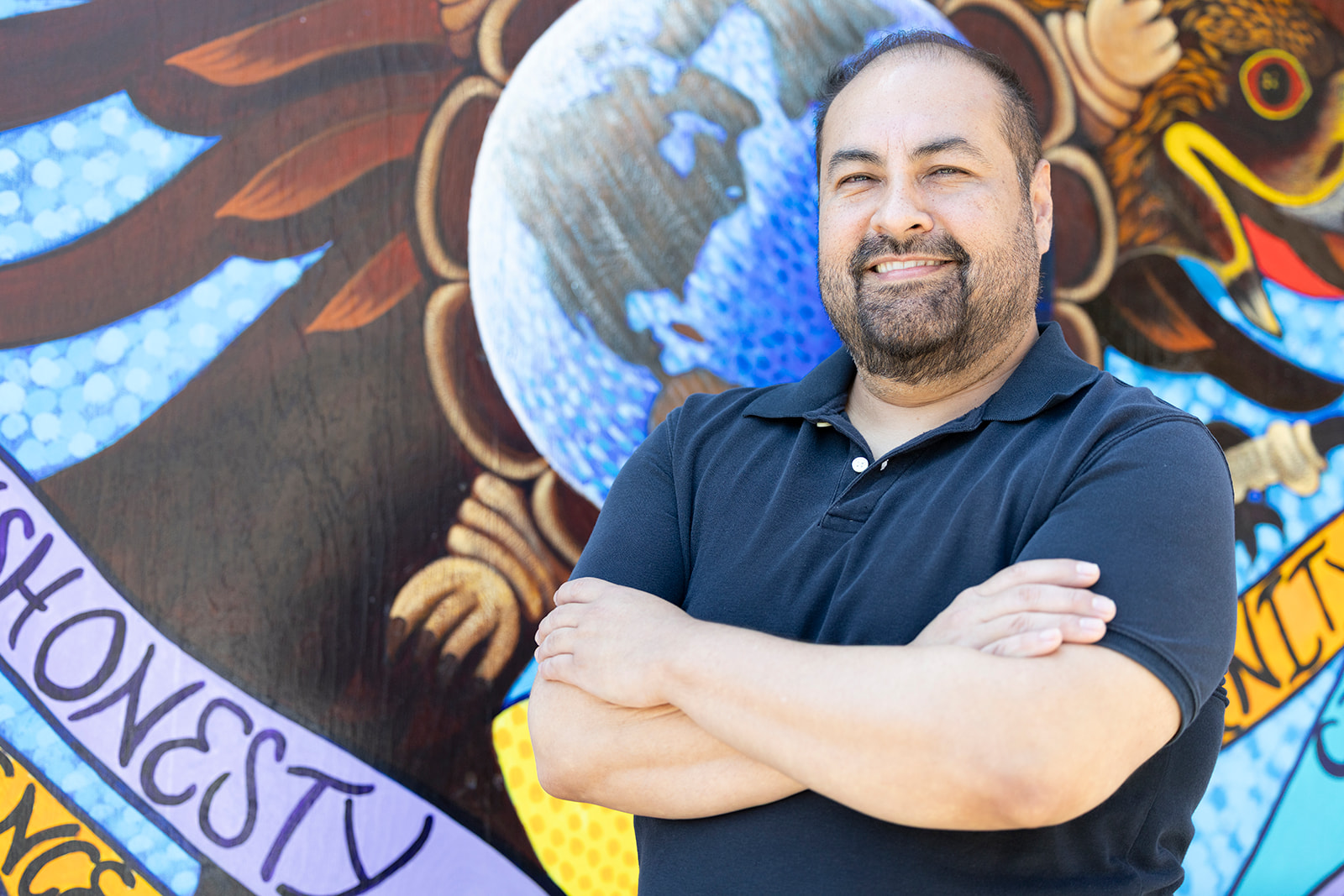
Joseph Perales, LCSW, DrPH, Clinical Director of Casa del Sol
Casa del Sol:
Expanding the Workforce in Mental Health Care
Dr. Joseph Perales, LCSW, DrPH, began his career as a graduate intern in Berkeley’s Master’s in Social Work (MSW) program, working with populations living with severe and persistent mental illness. Motivated to create systemic change, he pursued a doctorate in community health, focusing on task shifting—a model that redistributes healthcare tasks to trained non-specialist para-professionals. After completing his degree, he came to La Clínica, stepping into a leadership role to develop training programs that rely on this model to expand the workforce and deepen the quality of care.
While the national average wait time for behavioral health services is 48 days, Casa del Sol sees patients the same day, determining immediate next steps—a critical advantage for a community-based clinic where resources are unpredictable.
Meeting the Integrated Care Needs of the Community
Casa del Sol, the Specialty Mental Health clinic that Joseph leads, offers culturally responsive care and collaborates with institutions such as UCSF, Stanford University, and UC Berkeley. The program’s scope is wide, serving individuals with mild to severe needs, including those dealing with trauma, HIV/AIDS, and high-risk psychiatric conditions.
One of the program’s most significant strengths is its integration of peers who have faced similar challenges themselves and now provide counseling, care management plans, and resource navigation services to patients. Their ability to connect with patients on a personal level, phrasing health messages through shared experience, sets them apart.
Perhaps most impressively, while the national average wait time for behavioral health services is 48 days, Casa del Sol provides same-day access and helps patients identify immediate next steps—a critical advantage for a community clinic navigating unpredictable resources.
agility
The Future Requires Agility and Innovation
Another promising model is reverse integration, which embeds primary care in mental health settings. The model could dramatically improve outcomes for those with severe mental illness, who often have shorter life expectancies due to unmet physical health needs.
The opportunities for innovation are many but resources remain constrained. Policy shifts, like California’s sunsetting Mental Health Services Act, require agility. Across the board, the high cost of living in the Bay Area makes recruiting and retaining staff difficult. Meanwhile, public health systems continue to apply systemic pressure downstream, expecting community-based organizations like La Clínica to fill needs without adjusting compensation. And the need is only growing.
Where the program sees opportunity is in expanding task shifting, diversifying funding, and forming advocacy coalitions. However, scarcity remains a challenge due to a lack of staff, treatment rooms, or training hours. With a team of 30-50 professionals serving thousands annually, the demand is relentless.
Future expansion and impact mean more community-based peer navigators and innovative care pathways. It means more resources, more staff, and more systemic support to ensure that mental health care remains accessible, compassionate, and unwaveringly dependable for those who need it most. Patients have placed their trust in the program, knowing they’ll be met with cultural and linguistic competency. Specialty Mental Health clinics like Casa del Sol must be supported accordingly so they can scale and meet the considerable demand.
